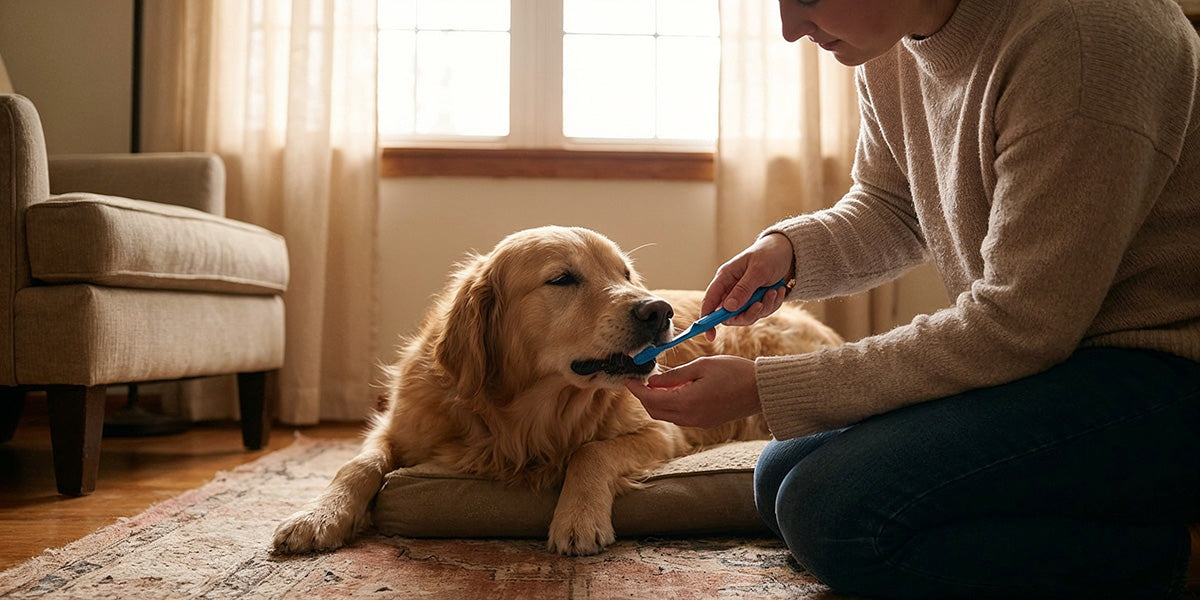
Brushing is the gold standard - there's no getting around that. But if your dog clamps their mouth shut at the sight of a toothbrush, you're not out of options. Dental chews, water additives, dental gels, special diets, dental wipes and seaweed supplements can all help slow down new plaque and keep a mouth healthier between vet visits. The one honest catch, up front: none of them remove tartar that has already hardened on the teeth. Once plaque turns to that yellow-brown crust, only a vet can take it off.
So think of everything below as plaque control - brilliant for staying on top of a clean mouth, not for rescuing one that's already gone too far. Here's what actually works, what's mostly wishful thinking, and the simple routine that ties it together.
Can you really clean a dog's teeth without brushing?
Yes - partly. You can meaningfully slow the build-up of new plaque without ever picking up a brush, and for a dog that won't tolerate brushing, that's a genuinely worthwhile win. What you can't do is reverse what's already there. Plaque is a soft film that you can disrupt; once it mineralises into hardened tartar (vets call it calculus), it's bonded to the tooth and needs professional scaling to remove. Keep that distinction in mind and the rest makes sense: the goal of every no-brush method is to stop soft plaque before it hardens.
The methods that actually work
These are the approaches with real mechanical or proven benefit. The best results come from combining a couple of them daily rather than relying on any single one.
Dental chews
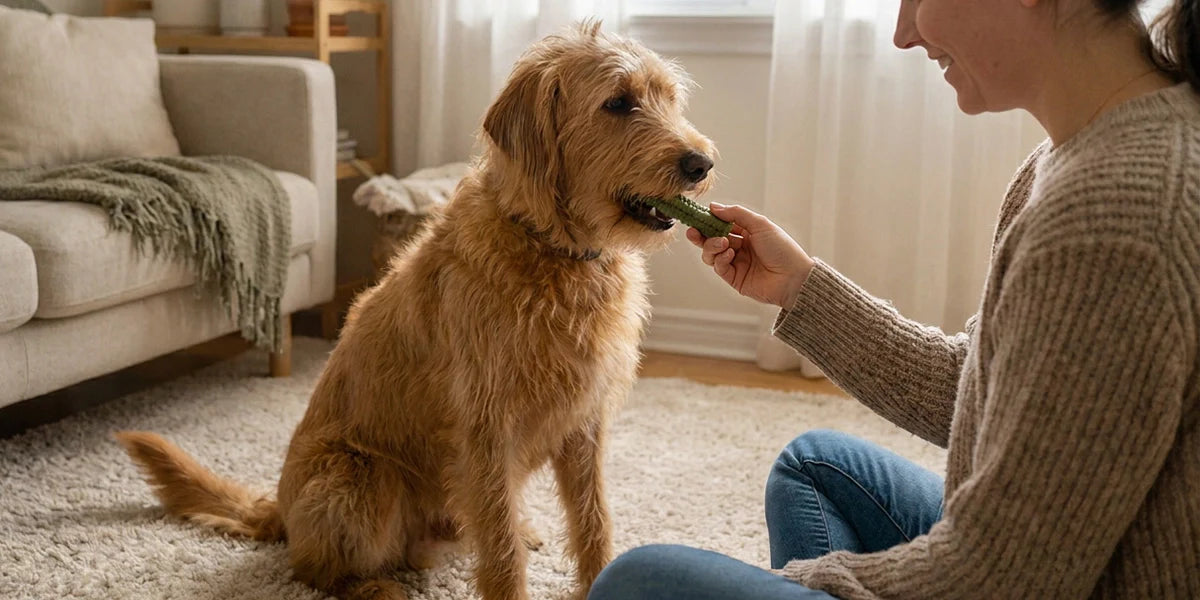
The easiest place to start. A good dental chew works by scraping plaque off as your dog gnaws, and many also carry enzymes or additives that help. Give one daily for the best effect. Two things to watch: chews add calories (factor them into the day's food, especially for smaller dogs), and avoid anything rock-hard - antlers, hooves, very hard nylon and bones can crack teeth. A good rule is the thumbnail test: if you can't make a slight dent in it with your thumbnail, it's hard enough to break a tooth.
Look for the VOHC seal
The Veterinary Oral Health Council awards a seal to dental products with proper evidence behind their plaque- or tartar-reducing claims. It's the single most reliable shortcut to a product that actually does something.
Water additives and dental gels
Both are about as low-effort as dental care gets. Water additives go into the drinking bowl and work quietly all day to reduce the bacteria that form plaque. Dental gels are smeared onto the teeth and gums - many are enzymatic and need no brushing at all. Neither is dramatic on its own, but they're easy to keep up, which is half the battle, and they pair well with chews.
Dental diets
Some specially formulated foods are designed to clean as the dog eats - the kibble is shaped and textured to brush against the tooth, and some include ingredients that stop minerals binding into tartar. A quick myth-bust here: ordinary dry food does not clean teeth. Standard kibble shatters on first contact and does almost nothing. It's only the purpose-built dental diets (often vet-recommended, and worth looking for the VOHC seal) that earn their keep.
Dental wipes and finger brushes
A dental wipe, or a rubber finger brush, lets you physically rub plaque off the outer surfaces of the teeth without the full performance of brushing. They're less effective than a proper brush, but for a reluctant dog they're a brilliant gateway - many owners who start with a finger brush end up able to brush properly a few weeks later.
Seaweed supplements
The popular one is a specific brown seaweed, Ascophyllum nodosum, sprinkled onto food as a powder. The idea is that it works from the inside - absorbed and passed into the saliva, where it makes plaque less able to stick. The evidence is mixed but promising for specific tested products, with studies showing a modest reduction in plaque and tartar for some. It's not a miracle, and a couple of caveats matter: it contains iodine, so check with your vet before using it in a dog with a thyroid condition, and stick to the recommended dose. Choose a product that's actually been tested rather than a generic kelp powder.
Dental chew
Daily gnawing scrapes off plaque; many add enzymes.
WorksWater additive
Low-effort, all-day bacteria control in the bowl.
WorksSeaweed
Modest evidence for some tested products. Mind the iodine.
Some helpCoconut oil
Popular online, but dental benefit is unproven; calorie-dense.
MythCarrot
Healthy low-cal chew with light mechanical help. An extra.
Some helpRaw bone
A leading cause of cracked teeth and gut risks. Vets advise against.
RiskyThe "natural" ones people ask about
These come up constantly, so here's the honest read on each.
Coconut oil
Hugely popular online, but the dental evidence is thin - claims about it killing plaque bacteria are mostly unproven in dogs. It's also very calorie-dense and can upset some dogs' stomachs (and isn't ideal for dogs prone to pancreatitis). It won't do any harm in tiny amounts, but don't expect it to clean teeth.
Carrots
A raw carrot makes a decent low-calorie chew, and dogs enjoy gnawing one - so it gives a little mechanical help and is far better than a sugary treat. But it's a nice extra, not a substitute for real dental care, and it won't touch existing tartar. Cut it into safe-sized pieces for gulpers.
Raw bones
This is the one to be careful with. Some owners swear by raw bones for cleaning, but most vets advise against them, and for good reason: bones are a leading cause of cracked teeth (especially the big back chewing teeth), and they carry real risks of gut blockages, perforations and bacterial contamination. Cooked bones are never safe - they splinter. If you're set on using bones, talk to your vet first, never give cooked ones, match the size to your dog and always supervise. For most dogs, a vet-approved dental chew is the safer way to get the same gnawing benefit.
What no no-brush method can do
It's worth being completely clear about the ceiling here, because it's where dogs get hurt:
Where no-brush methods stop — and home “fixes” go wrong
When tartar is established, the fix is a proper scale and polish at the vet, done under anaesthetic so the whole tooth — including below the gum — can be cleaned and checked. In the UK that typically runs a few hundred pounds, more if extractions are needed; your vet will quote for your dog. It's far cheaper and kinder caught early.
Already see brown tartar along the gum line?
No at-home method will shift it. Check how far along your dog's mouth is in 30 seconds.
A realistic no-brush routine
You don't need to do everything. Pick a daily method you'll actually keep up, check the mouth regularly, and let your vet handle what you can't. Here's a simple rhythm that works.
| How often | What to do |
|---|---|
| Every day | One reliable plaque-control habit - a dental chew, a water additive, or a quick gel/wipe. Consistency beats intensity. |
| A few times a week | If your dog tolerates it, a finger-brush or wipe over the outer surfaces of the teeth. |
| Weekly | Lift the lip and have a look - clean white teeth and pink gums are the goal; tartar, red gums or bad breath are your cue to act. |
| Every few months | Try nudging towards proper brushing - even a few teeth counts. Reassess what's working. |
| At least yearly | A vet dental check, and a professional scale and polish whenever they advise one. |
Make the routine stick
The hardest part of any routine is remembering it — set a daily dental reminder so it actually sticks.
The honest bottom line: brushing daily will always beat the alternatives, so if there's any chance of building up to it, it's worth the effort - our step-by-step guide to brushing a dog's teeth is written for exactly the dogs that hate the idea. But a consistent no-brush routine is far better than nothing, and for plenty of dogs it's the difference between a healthy mouth and a painful one. If you're not sure where your dog stands right now, the dental health checker is the quickest way to find out.
This guide is general information to help you care for your dog's teeth. It is not a diagnosis and doesn't replace veterinary care — if your dog has tartar, sore gums or bad breath, please see your vet.