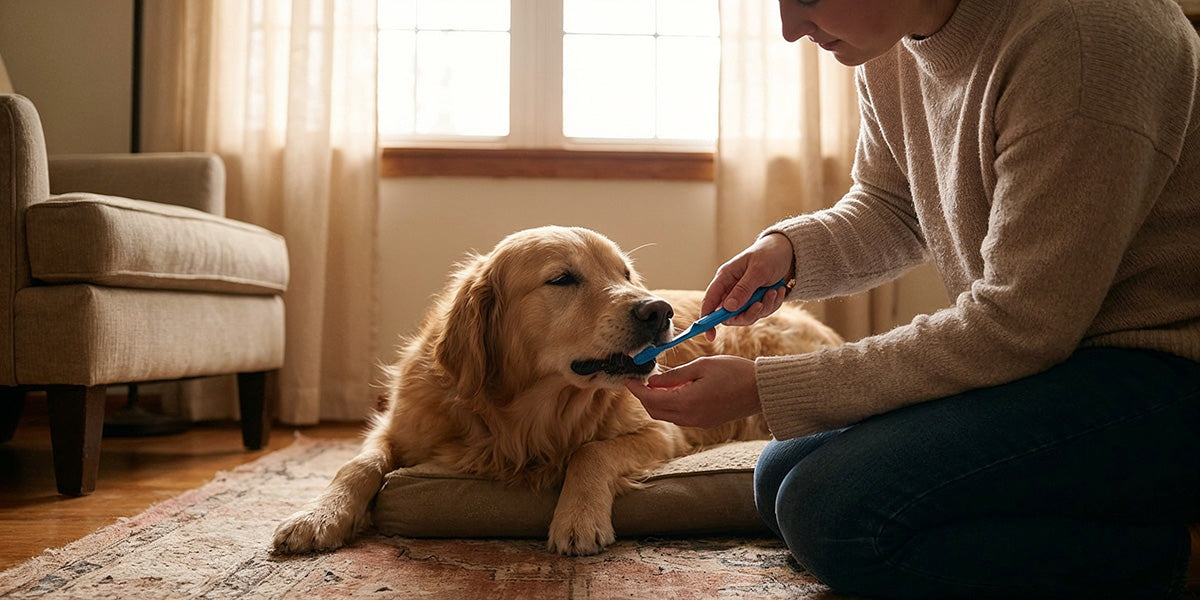
Brushing daily with a pet toothpaste is the single best thing you can do for your dog's teeth — nothing else removes plaque as well before it hardens into tartar. The good news is that almost any dog can learn to accept it, even one that hates the idea today, if you build up slowly and keep it positive. Below is a simple step-by-step routine, how often to do it, exactly what to use (and the one thing you must never use), and a two-week plan for winning over a reluctant dog.
Should you brush your dog's teeth? (And do you have to?)
Yes — and ideally, yes. Dental disease is the most common health problem vets see in dogs; by the age of three, most already have some degree of it. It's painful, it's expensive to fix once it's advanced, and the bacteria involved can affect the heart, liver and kidneys over time. Brushing is the most effective way to stop the plaque that causes all of it. You don't have to brush — there are gentler alternatives if your dog truly won't tolerate it (more on those below) — but if there's any way to make brushing work, it's worth the effort.
How often should you brush a dog's teeth?
Daily is ideal; three times a week is the realistic minimum. Plaque starts to mineralise into hardened tartar within a couple of days, so brushing every day stops it before it sets. Anything less than about three times a week makes much less difference, because the plaque has time to harden between sessions. If daily feels like a lot at first, aim for a consistent every-other-day rhythm and build from there — the habit matters more than perfection.
What you'll need
Only two things, really:
- A dog toothbrush — a long-handled, angled dog brush, a rubber finger brush, or even a soft child's toothbrush. Finger brushes are great for starting out and for small dogs.
- Pet toothpaste — enzymatic, in a flavour dogs like (poultry or malt), and crucially designed to be swallowed safely, since dogs can't spit.
Never use human toothpaste
Human toothpaste is toxic to dogs
It often contains fluoride, which is harmful in the amounts a dog would swallow, and many “sugar-free” types contain xylitol, which is extremely dangerous to dogs — even small amounts can cause a dramatic drop in blood sugar and liver failure. The foaming agents also upset their stomachs. Always use a toothpaste made specifically for dogs, and never your own.
How to brush your dog's teeth — step by step
Pick a time when your dog is calm — after a walk is ideal — and keep each session short and upbeat. You don't need to scrub every surface; the outer surfaces of the teeth (the ones facing the cheek) are where plaque and tartar build up most, so that's where to focus.
Let them taste the toothpaste
Put a little on your finger and let your dog lick it off, so they learn it's a treat, not a threat.
Touch the lips and gums
With a dab of paste on your finger, gently lift the lip and rub a few teeth and the gum line. Keep it brief and reward them.
Introduce the brush on a few teeth
Add paste to the brush, lift the lip, and brush just two or three front teeth at a 45-degree angle to the gum line, with small circular strokes. Stop while it's still going well.
Build up to the full mouth
Over several sessions, work back along the side teeth and round to the other side, always concentrating on the outer surfaces. The tongue keeps the inner surfaces fairly clean, so don't fight your dog to reach them.
Reward every single time
Finish each session with praise, a favourite game or a treat, so brushing always ends on a high. Aim for around 30 seconds a side once your dog is comfortable.
A few small things make it much easier: kneel or sit beside your dog rather than looming over them face-on, which feels less threatening; brush at the same time each day so it becomes a predictable part of the routine; and approach from the side of the mouth rather than the front. Little and often beats one long, fraught session — a relaxed 30 seconds every day does far more good than a five-minute wrestling match once a week.
How to brush a dog that hates it
Most "my dog won't let me" problems come from going too fast. The fix is to slow right down and let your dog set the pace over a couple of weeks. Here's a plan that works:
| Days | What to do |
|---|---|
| 1–2 | Just let your dog lick a little pet toothpaste off your finger. Praise. That's the whole session. |
| 3–4 | Toothpaste on your finger; gently lift the lip and rub a couple of front teeth and gums. Reward and stop. |
| 5–7 | Put paste on the brush or finger brush; let them lick it, then brush two or three front teeth. Reward. |
| 8–10 | Brush the front and side teeth on one side, focusing on the outer surfaces. Keep it short. |
| 11–14 | Work up to both sides, all outer surfaces, around 30 seconds a side. Finish with a game. |
| Ongoing | Brush daily (or at least three times a week), always ending on a positive note. |
A few rules that make or break it: keep every session short, never use force or heavy restraint (it cements a bad association), stop and drop back a step if your dog gets anxious, and always finish with something they love. If your dog stays genuinely distressed despite a slow, gentle build-up, don't battle on — switch to the no-brush options below and let your vet take a look in case there's a sore spot making the mouth tender.
Free “2-week brushing starter plan”
The Day 1–14 build-up as a printable checklist to stick on the fridge.
What about puppies?
Start as early as you can. From around eight to twelve weeks, get your puppy used to having their mouth handled — a few seconds of gently lifting the lip and touching the teeth and gums, paired with praise. Once their adult teeth are in (by around six months), move on to proper brushing. A puppy raised to think mouth-handling is normal becomes a dog that's easy to brush for life. And if you've got an older dog who's never been brushed — it's never too late. You'll just want to take the two-week plan even more slowly.
Make brushing second nature
Daily only works if you remember it — set a brushing reminder so it becomes second nature.
If brushing really isn't possible
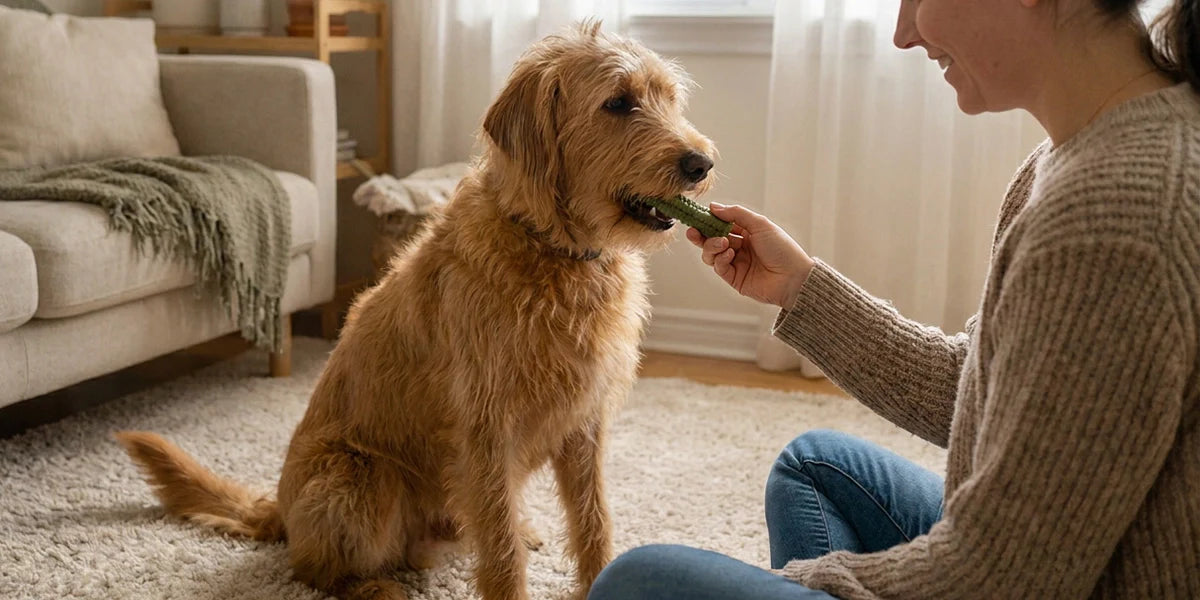
Some dogs, despite everyone's best efforts, simply won't accept a brush — and that's okay. Brushing is the best option, but it isn't the only one. Dental chews, water additives, gels and special diets all help control plaque, and our guide to cleaning a dog's teeth without brushing walks through what actually works. It's also worth checking the state of the mouth before you start, since heavy tartar or sore gums can make brushing painful and need a vet first — the dental health checker is a quick way to gauge where things stand, and knowing which teeth collect the most tartar helps you focus your brushing where it counts.
Check the mouth before you start brushing
Heavy tartar or sore gums can make brushing painful. Take 30 seconds to see where things stand first.
This guide is general information to help you care for your dog's teeth. It is not a diagnosis and doesn't replace veterinary care — if your dog's mouth looks sore, swollen or has heavy tartar, please see your vet before brushing.